Here are 12 basic tips for having a warm night’s sleeping while sleeping out on the snow or ice.
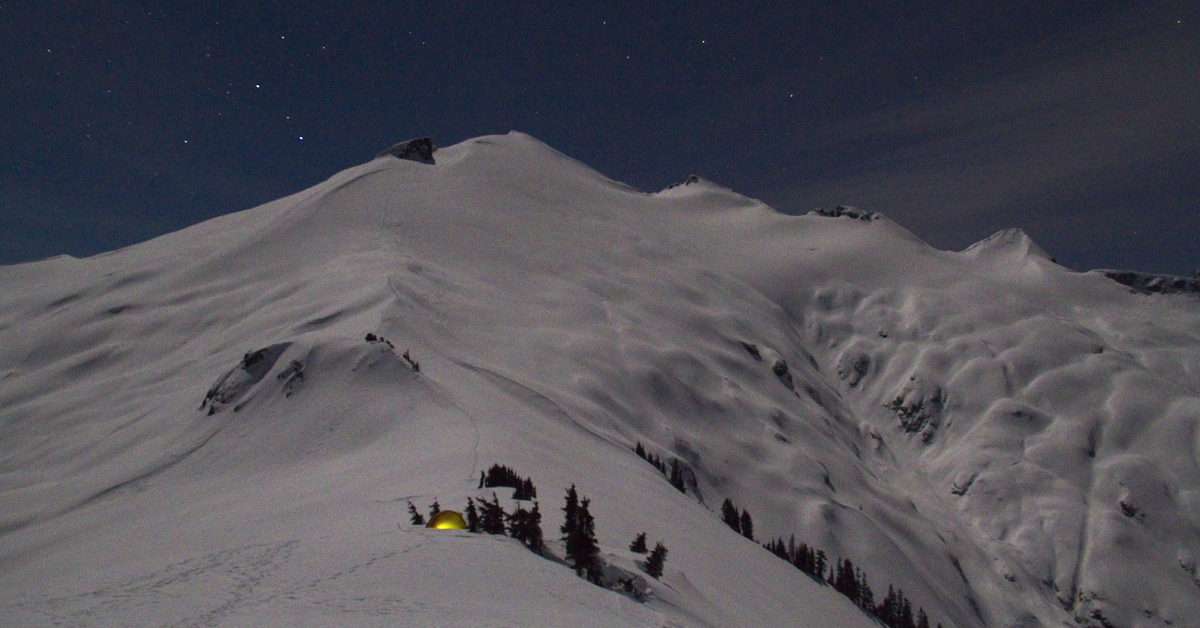
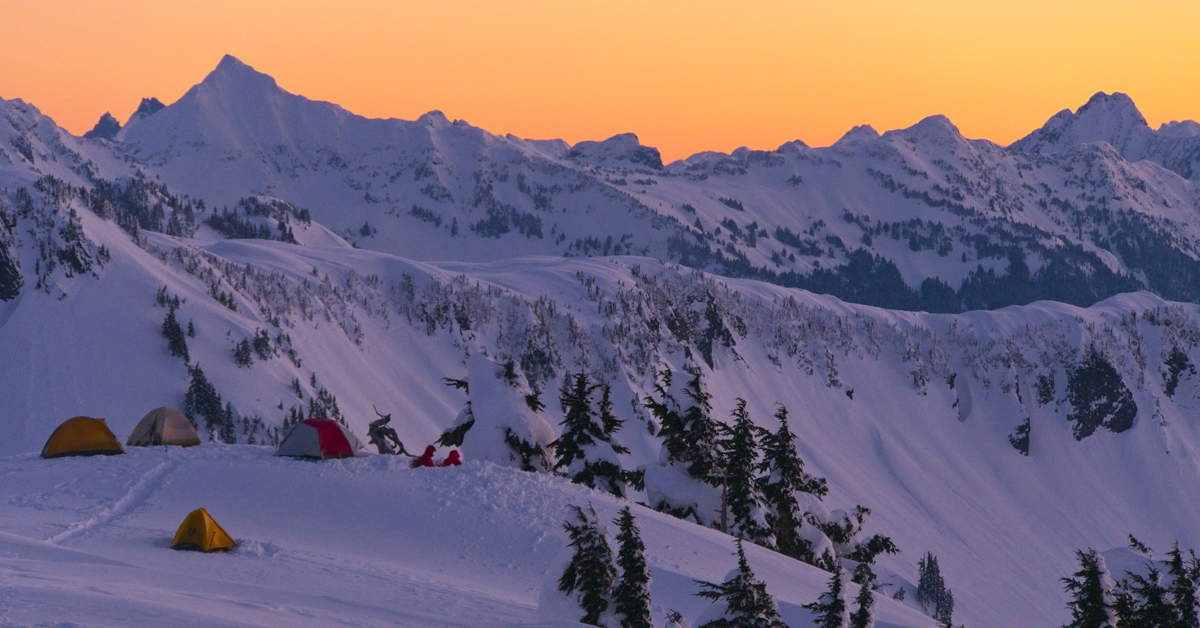
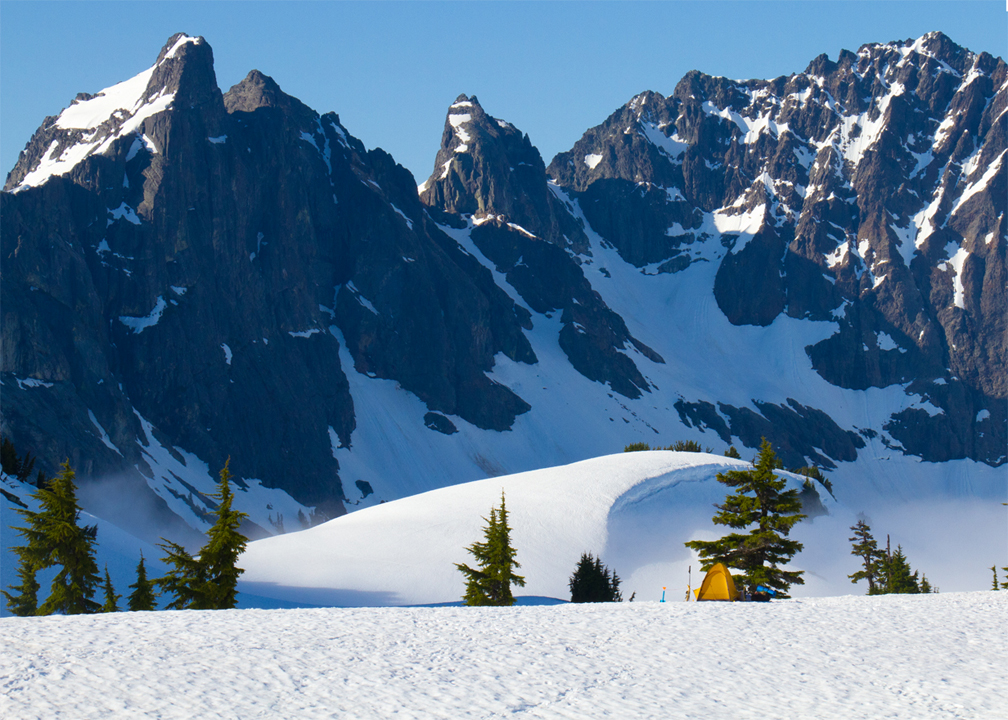
1. Pick a sheltered campsite. Camp on the leeward side of ridges and mountains or near large boulders that break the wind. Avoid camping near water or in drainage areas where cold air collects. For me, views take priority, so generally, I don’t always pick the most sheltered site. To stay warm, I rely on other strategies (listed below).
How to Choose a Sleeping Bag for Pacific Northwest Winter Backpacking
If you are used to camping in summer and the shoulder seasons and are wondering what type of sleeping bag you’ll need for winter use in the Cascade Mountains in Oregon and Washington State, here are some basic points to consider.
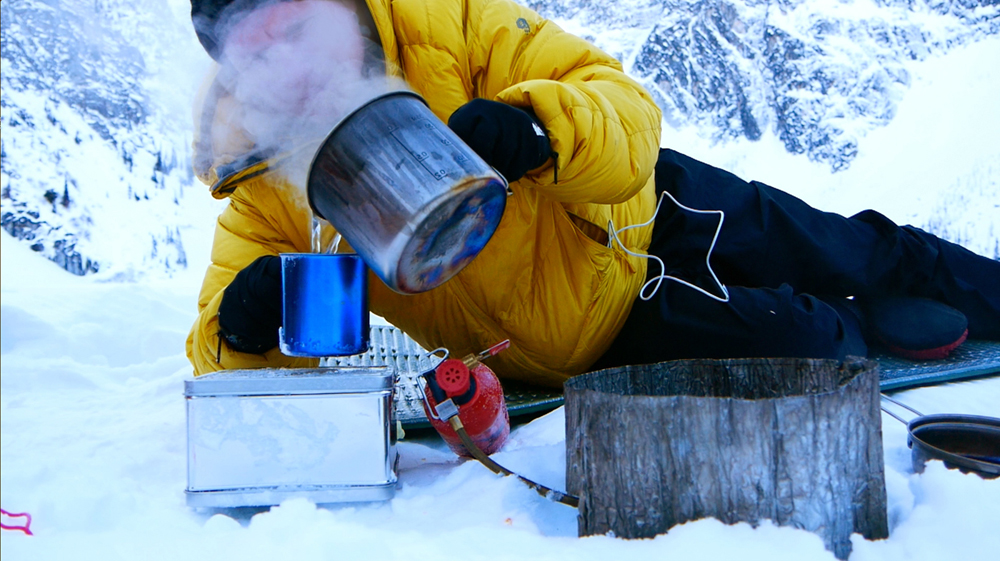
Melting snow while camping on a frozen alpine lake,
Updated September 2025.
If you want to really enjoy winter backpacking, one of the first skills you need to master is your water management. This is both about staying hydrated and staying warm. It may seem like a minor thing to have your water freeze, especially in a plastic bottle, but if you allow this to happen, it is one of those small things that can spiral into big problems. You don’t want this to happen.
Do not use pack bladders
Perhaps the most important thing to know about winter water management is that you cannot risk letting your gear get wet or letting your water freeze in containers. Pack pladders are dangerous in winter conditions because they can leak on your vital insulated gear and put you at risk of hypothermia. The pack bladder mouth value easily freezes making it impossible to extract water placing you are risk of dehydration. And, if the bladder freezes at night or in your pack, it becomes useless. You simple are carrying heavy useless ice.
If not a pack bladder, what should you use? Let’s start with the basic gear necessary for managing your water.
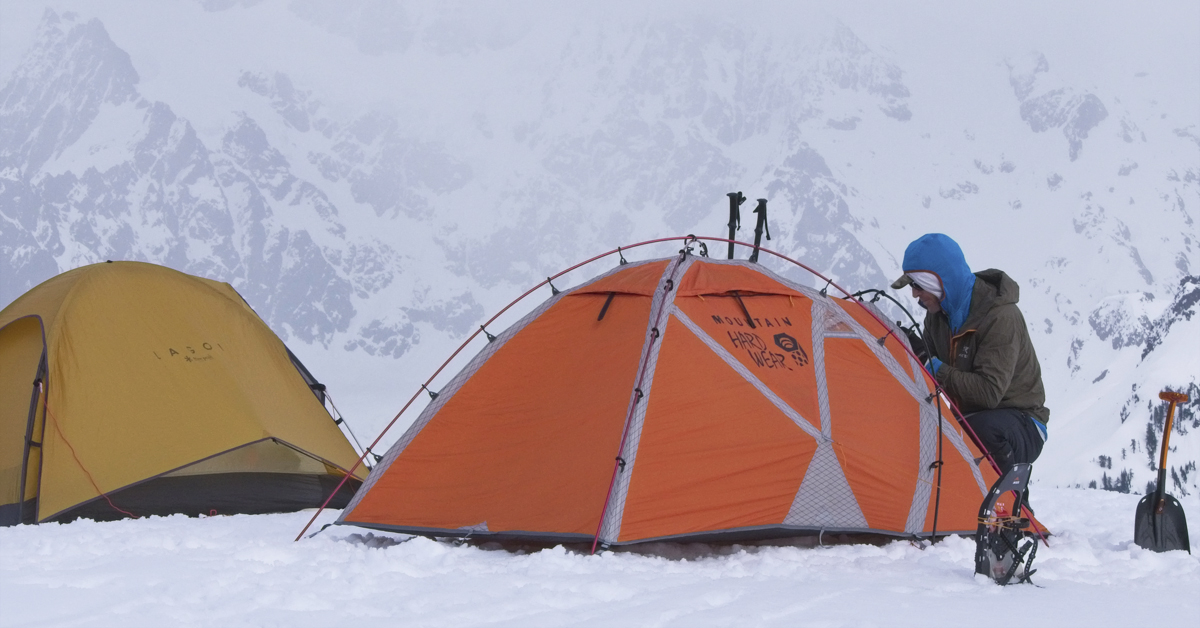
The short answer is yes. I’m not going to do a detailed review of particular tents, but I want to mention a few models that I see often on our trips. I’ll also discuss a few pros and cons of using 3-season tents in the Pacific Northwest winter conditions and some of the best 4-season options available. In context, I’ll be referring to small and light tents for backpacking rather than tents that are used for basecamps and long stays in one location.
Even ifyou are an experienced 3-season backpacker, realize that the winter adds unique risks, and what you know about common gear, such as stoves, hydration systems, sleeping bags, sleeping pads, and tents, will be different from what you need to know for winter conditions.
Know the Risks
Whenever you hike into the backcountry you expose yourself to dangers and risks, such as avalanches caused by snow, mud, or rock slides. There are hunters, falling rocks, falling trees, tree wells, and the risk of slipping off ledges, falling through snow or ice, suffering from hypothermia, snow blindness, frostbite, severe sunburns, stove accidents, etc.
Know the risks when you decide to go winter backpacking. Be prepared and bring what you need. Basic tips for staying warm and knowing what gear to bring are explained below. This is not a comprehensive discussion of winter backpacking or backcountry safety, but it does contain important things that you MUST know before going.
In the PNW most people hike July-September and this concentrated use can put considerable strain on the trails. To control the adverse impact, Oregon is now expanding permit areas to limit the number of hikers and the same is likely to happen in Washington state in the years to come. The popular area known as the Enchantments, had over 17,000 visitors in 2017 with 3000 overnight permits issued (over 20,000 people applied). These permits are just for six months—May 15 through October 31. July and August probably get the highest number of visitors.
In the hiking community, everyone is expected to follow voluntaryleave-no-trace (LNT) practices. However, if even 1% of 10,000 visitors per season on a 20 mile trail don’t know or don’t care about LNT practices and leave garbage or human excrement along the trail, that’s 100 incidents of the environment being trashed each year.
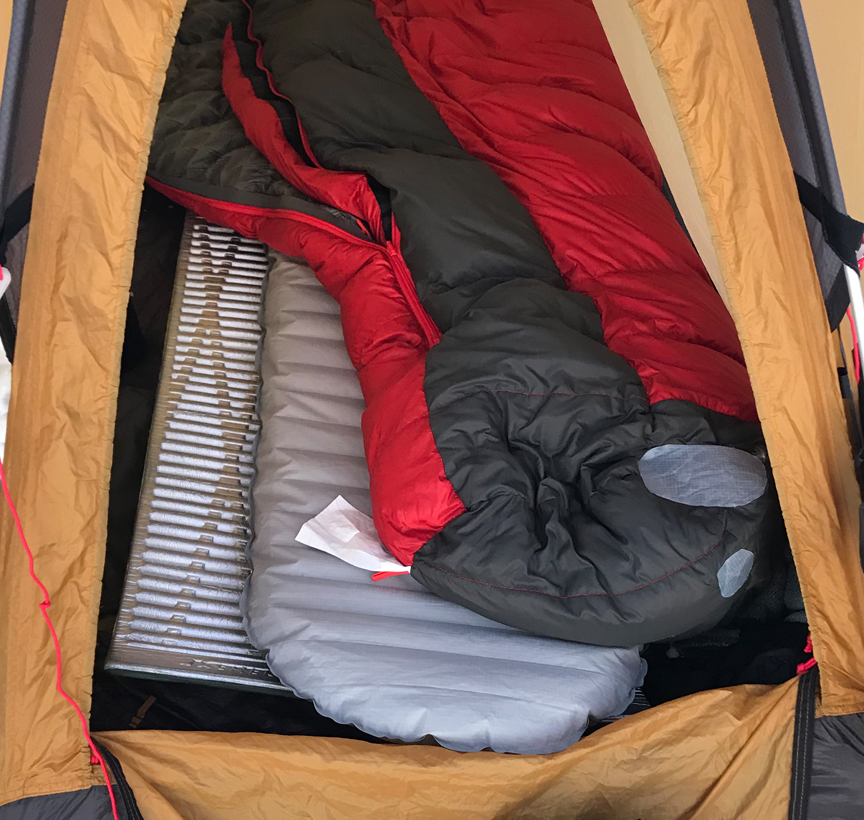
Be equipped to camp on the snow. Once you learn how to do it and how comfortable it is, you may never want to camp on the ground again. To do this, you need a sleeping system with sufficient R-value (5+) under your sleeping bag. The standard practice for snow camping in the Pacific Northwest is two mattresses, either one solid core and one air or two solid ones.
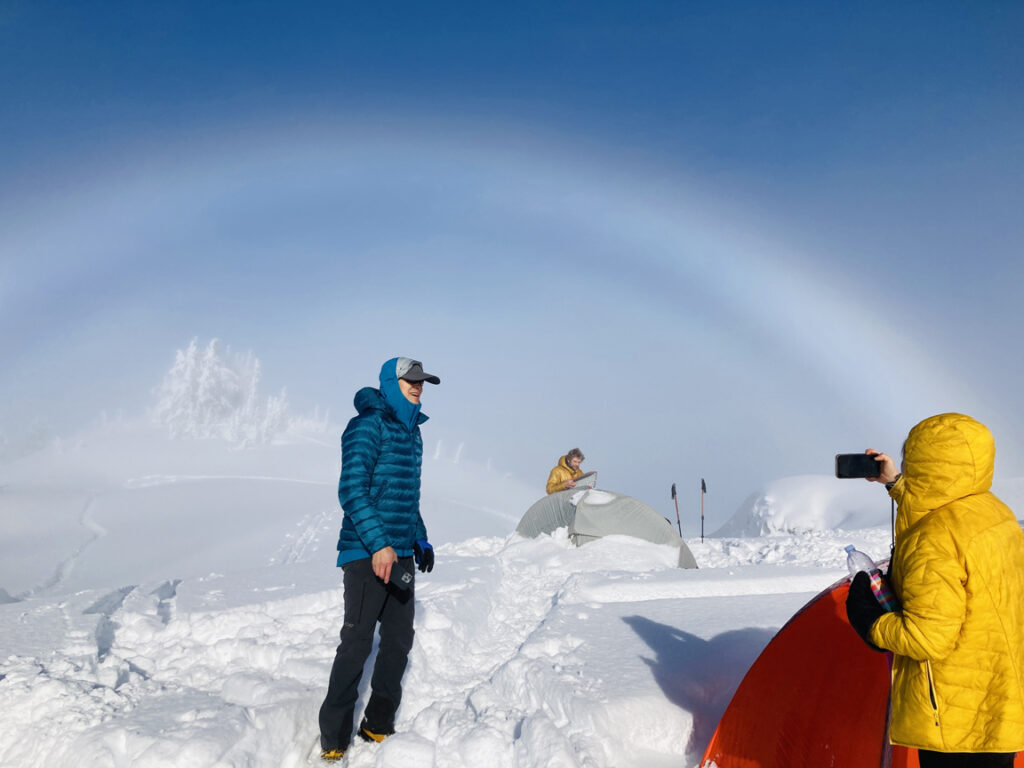
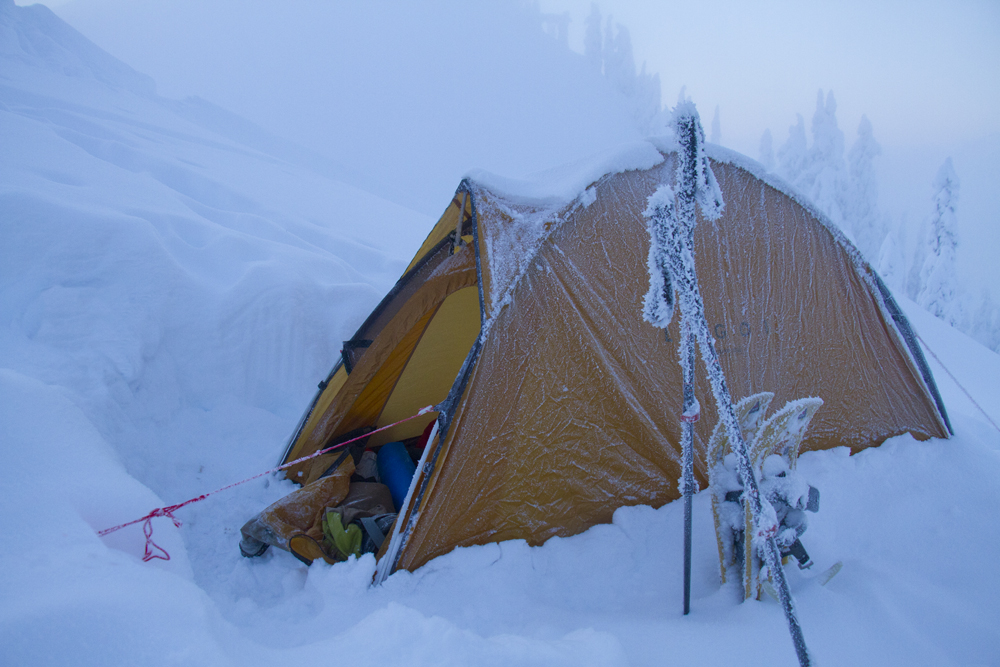
Snow is soft and clean, usually free of sticks and rocks. It makes the most comfortable surface and often requires no preparation. Sometimes you might need to stomp it down a bit with snowshoes or level it with a snow shovel. It is easy to level a spot even on slopes. Pitching a tent on the snow is the lowest impact (leave no trace) way to camp. It also increases your campsite options (unless you are in an area where designated campsites are the only permissible locations). And, it is often the only option if you want to camp in the winter season. So be prepared!
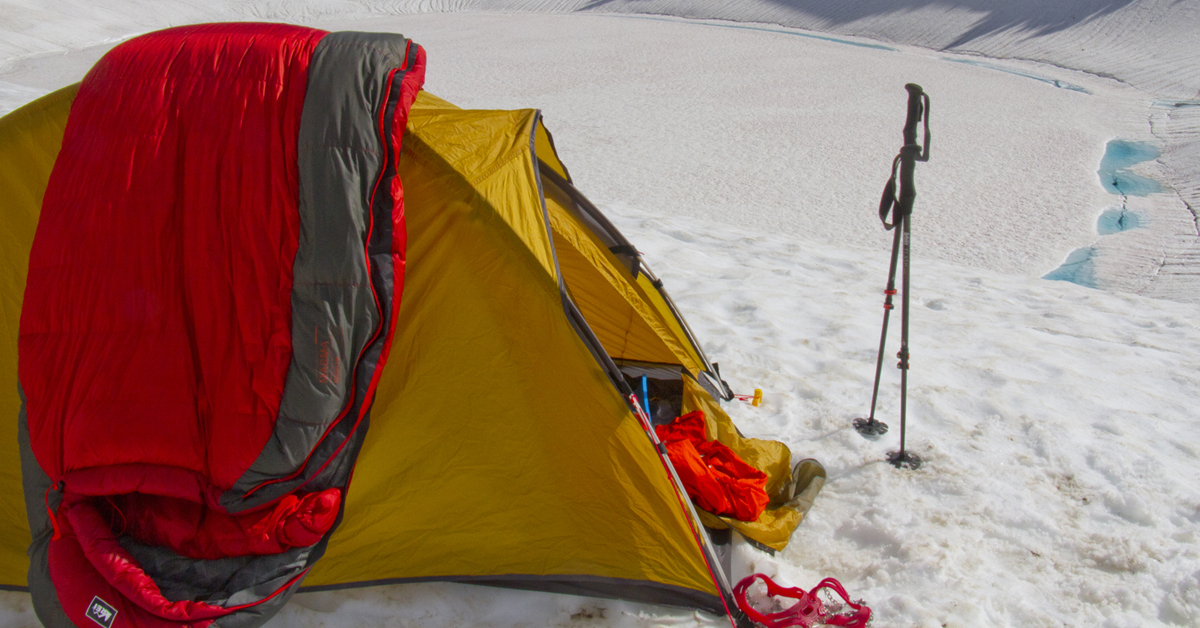
My main sleeping system consists of a roll-out solid core foam mattress, an air mattress, and a sleeping bag. The solid core foam mattress has an R-value of 2.8 (about $30) and two of these will do the job. Or one 2.8 foam pad coupled with an air mattress with at least 2.5 R-value and you’ll be comfortable. I use a Therm-a-Rest NeoAir XTherm Sleeping Pad which has 5.7 R-value ($150–225). The patches on my sleeping bag are the result of some small critter eating through the bag to gather down stuffing.
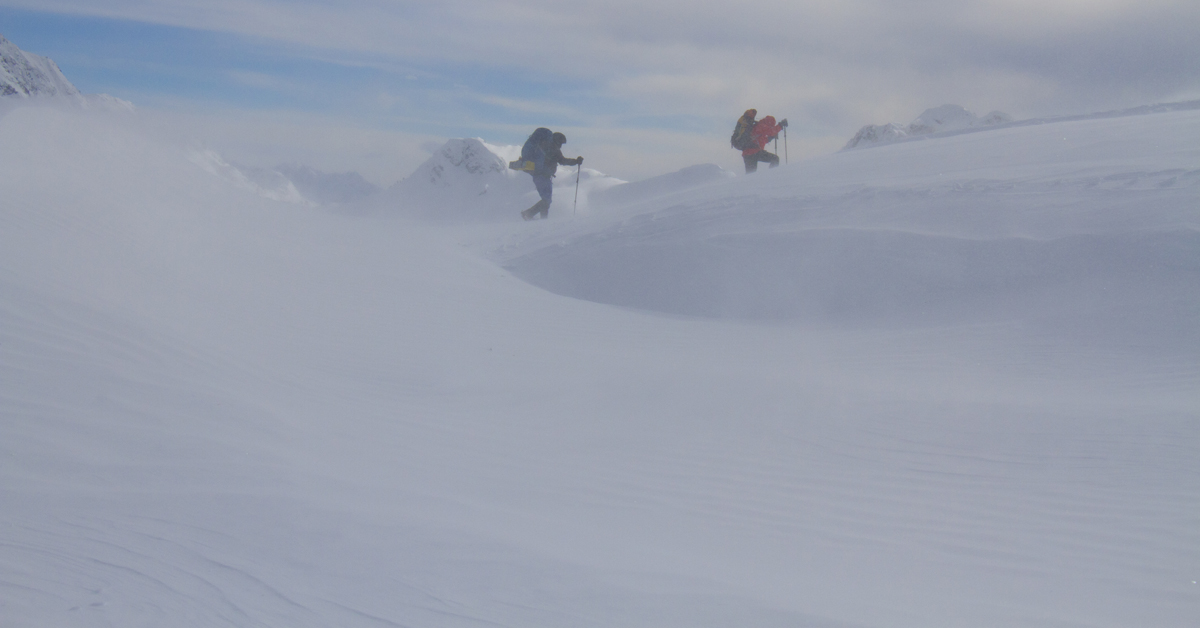
Pacific Northwest winter weather is mild with temperatures usually between 20 to 35ºF for most backpacking trips between 3,000 and 7,000 feet of elevation. However, during the winter months, wind speeds increase significantly and trip planning needs to include clothing for wind protection to prevent discomfort, hypothermia, and even frostbite.
This is just a quick tip to help you stake out your tent on snow. You may already be familiar with snow stakes or pegs and the deadman strategy for securing the pegs in deep soft snow. What I want to explain here is a method of setting up your guy lines so that you don’t have to tie any knots when you set up your tent. That is, the only tieing involved is done at home before you head out to the wilderness. Technically, you do need to tie one knot, a girth hitch to attach the cord to the stake, but this isn’t the kind of knot that requires much finger dexterity or time in cold conditions.