A true account of frostbite in the Cascade Mountains.
I want to share this story because frostbite can occur when you don’t expect it. You must be proactive about protecting your hands and feet in cold weather.
In the last 10 years of winter backpacking, we have recorded temperatures as low as 4 degrees F on multiple occassions, been in freezing windstorms so strong that it was difficult to balance and walk, a gale-force snow storm so severe it was declared a state of emergency by the governor, a blizzard at 10,000 ft on Mount Rainier, and had tents destroyed in freezing winds, yet never had a single case of frostbite. We came close with one case of frostnip, which occurred due to an unexpected snowstorm in August 2024, with high winds, when one hiker left her hands exposed for too long. Her injury was painful, numb, and slightly purple, but she recovered in a week. However, on the recent trip (March, 2026) recounted here, three people developed stage 2, superficial frostbite (purplish skin with swelling and blistering). It is important to understand why.
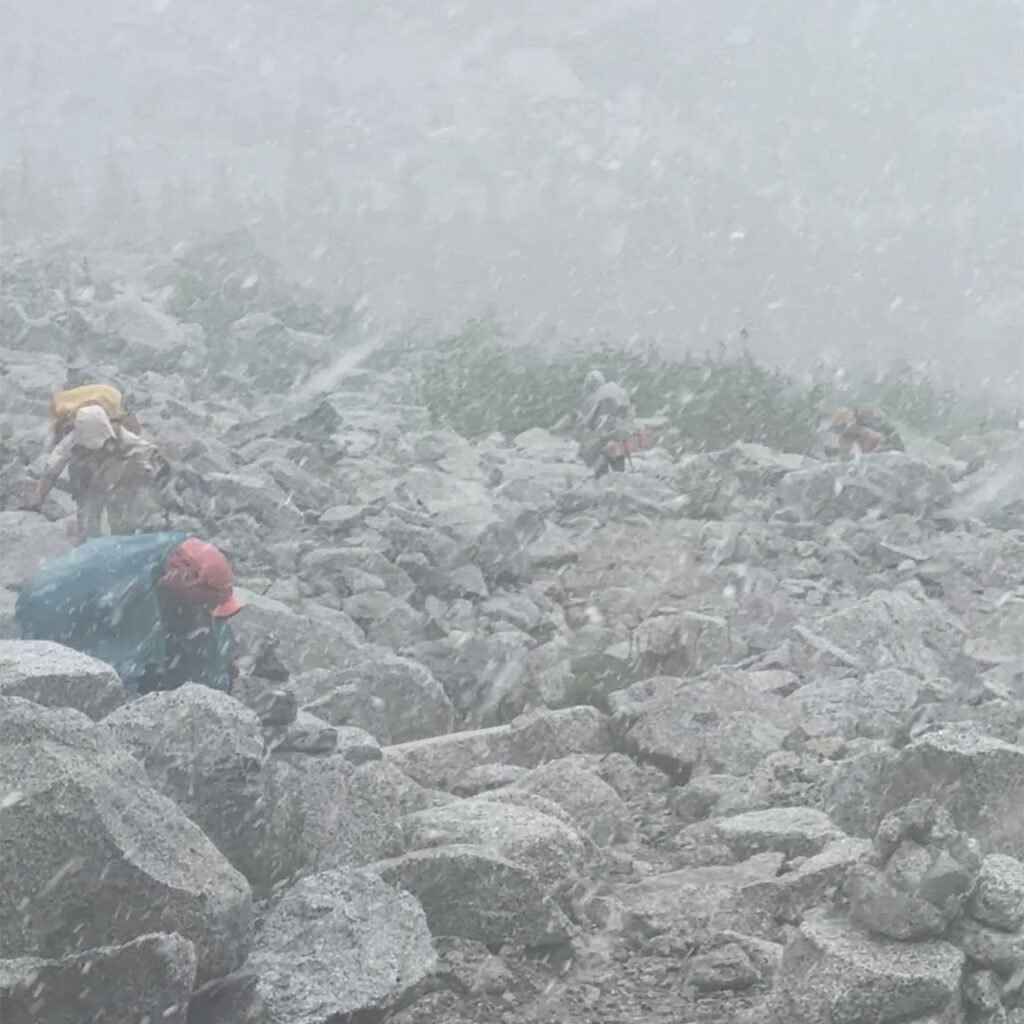
The March 2026 Event
Destination: We decided to head out to the “West Slopes North” of the Cascade Mountains. Of the nine avalanche zones, this was the only one that had a moderate avalanche danger; the rest were considerable or high. We have explored nine winter routes in this zone so far, and this was among the least challenging. I had done this route in winter three times, successfully reaching the destination twice. Total Distance is 12 miles, 4250 ft elevation gain (according to Caltopo). We camped at 5600 ft., 11 people on the team, 4 with no prior experience. Main terrain hazards are avalanches, steep slopes, cornices, and tree wells.
Weather conditions: Our lowest recorded temperatures during this event were 10–12ºF. Mostly calm, but occasional wind/gusts in the 5–10 mph range. Deep fresh snow on the route, about 2 inches of expected new snow, with clouds and low visibility.

Event Preparation: Detailed information on how to stay warm at camp was shared, and new participants were encouraged to read it. Expected temperatures, weather, and required gear were discussed in the event notes prior to the event, including the “absolute” need for mittens, not just waterproof gloves.

Why Mittens are Warmer than Gloves
Mittens are warmer primarily because they keep fingers together in one compartment, allowing them to share body heat rather than isolating them. This design reduces the total surface area exposed to cold air, minimizing heat loss, while also offering fewer seams for warmth to escape. Mitten warm the hands faster than gloves.

Three Cases of Frostbite
The group was not affected equally. Most of the group was comfortable and stayed warm with no problems, as usual. But three people out of eleven experienced frostbite.
CASE 1: Only the tip of the right-hand thumb was affected. The hiker had a mitten with a thumb cover that didn’t work well. This was noticed on a previous hike, but wasn’t repaired or replaced for this hike. He described clearly when the mistake probably occurred: “I’m pretty sure the frostbite happened in the last 30–60 minutes before reaching camp. I had already changed gloves a few times earlier in the day, so I knew to stay on top of it. But on that final ridge, when I noticed my thumbs getting really cold, I told myself I was almost there and could deal with it soon. I should’ve recognized the cold much earlier and switched to the warm mittens immediately—even though the mittens were working fine for the other four fingers.” Apart from this mistake, he thought a previous history of cold-injuries, age, and bravado psychology contributed. However, he wasn’t exhausted at camp. He followed the main protocols to stay warm, and used excellent-quality insulated jacket and pants. He had an Durston X-Dome tent and built a snow wall and reported that he was warm at night.

CASE 2: Tip of right-hand index finger and thumb: Hiker chose not to wear mittens in order to maintain greater use of hands around camp during tent set up and cooking. Apparently, this extended exposure resulted in frostbite. This hiker’s hand injuries may have been worsened by Raynaud’s Syndrome and not adhering to the usual protocols for protecting and conserving warmth—waiting too long to change into a fresh base layer and insulated gear, and not adequately utilizing a hot-water bottle. He had a 3-season tent and built a snow wall. He has a zero-degree sleeping bag, but it was inverted, which probably allowed warmth to escape. His glove became wet during camp setup and he put them in the sleeping bag at night, but the right hand glove fell outside the sleeping bag. Because the gloves were wet and cold, and his mittens too tight, he used wool socks over his hands at breakfast.

CASE 3: This hiker provided the ICD-10 codes in the medical report, which all indicated “superficial” frostbite (some toes and fingers on both feet and hands). Frostbite probably occurred owing to long-term exposure and not wearing appropriate mittens when needed. Raynaud’s Syndrome may explain why only this hiker had similar frostbite on the feet. To protect feet, use fresh thick wool socks and down booties. Her gear was less than ideal—two sleeping bags with a liner and a 3-season tent. She didn’t build a snow wall, but her tent was behind another tent and it remain calm throughout the night. She said she was warm at night.

Other Contributing Factors
- Exhaustion: Cases 2 and 3 were both new to winter backpacking, and both were struggling with bulky and heavier-than-usual backpacks. The 5-mile snowshoe in new snow and 4,000 feet of elevation gain resulted in exhaustion, and exhaustion makes it more difficult to adhere to the best practices for staying warm. Decision-making can become cloudy and people are more reluctant to do the things they need to do. This may explain Case 2 putting the warm water bottle outside his sleeping bag. Exhaustion can also lead to loss of appetite, which further contributes to frostbite.
- Dehydration: Lack of water and food speed up the onset of hypothermia and frostbite. Dehydration causes blood vessels near the skin to tighten (constrict) to preserve heat for vital organs, leaving extremities vulnerable (the body prioritizes core temperature over protecting fingers, toes, and skin). The body breaks down food to produce energy, which in turn produces heat. A lack of food slows metabolism, causing the body’s core temperature to drop. When dehydrated, the body reduces blood volume, leading to thicker, slower-moving blood. This significantly reduces blood flow to the skin and extremities. Poor blood flow means less warmth is transported to the fingers and toes, causing them to reach freezing temperatures more quickly.
- Tight clothing: Circulation equals warmth, which is why tight gloves, mittens, and footwear should be avoided. For winter, also wear loose-fitting mittens and larger-than-normal boots.
- Loss of Core Warmth: When your core (upper body) is cold, it draws blood away from your extremities to protect and preserve the heart and brain. Your body literally sacrifices the hands and feet to save you. When you’re hiking, you’re generating too much heat to wear many layers, but as soon as you stop, you get cold and have to add layers. The frequent short stops along the route make managing warmth challenging. The most important transition is when you reach camp. At this stage of the trip, it is important to remove sweaty clothes, add layers, get a hot meal and warm fluids, and make a hot-water bottle. These procedures help restore warmth, especially over the course of the night. It typically takes hikers 4–5 trips to become efficient with these protocols. It is likely their core warmth was low for long periods of time.
- Wet gloves: Case 2 reported wet gloves. In addition to mittens, we bring waterproof freezer gloves for working in snow and cooking, and usually light liner gloves. Cold, wet gloves will wick away warmth from the hands. Gloves and socks can be dried or partially dried by keeping them in your sleeping bag close to your body at night. Normally, it is easier to stay dry in colder weather.
- Communication: No one mentioned the severity of their hand pain until after the hike when we returned to the trailhead. Frostbite symptoms are gradual, so apart from the pain, the darkening flesh, blisters, and swelling were gradually appearing by the end of the following day. The need to communicate was during the initial stages of pain at camp, when the team could have helped them begin rewarming. But as Case 1 reported, “Because the sensation felt similar to previous episodes, I assumed it would resolve the same way. That overconfidence didn’t help.” If you are not aware of the seriousness of the problem, you don’t see a reason to speak up.
- Raynaud’s Syndrome: Both cases 2 and 3 believe they may have Raynaud’s syndrome. Older age may have played a role as well. These factors make the need for precautions even more essential. While not factors in this situation, other physical and genetic factors contributing to frostbite include poor peripheral circulation (diabetes, atherosclerosis) and dehydration.
Some of the hikers had trouble operating canister stoves in the cold temps, but other hikers helped them out, so everyone got warm meals and hot water bottles. However, one hiker chose to rely on hand warmers instead.
Perception Matters
Frostbite seems unlikely in the Cascade Mountains because the winters are generally mild. Hypothermia is the more obvious danger. Frostbite charts show that risks in 30 minutes time period usually require –18ºF, which only happens in very high winds at low elevations in the Cascades. That is, you’re at risk in a situation where it happens quickly before you are able to react and protect yourself, such as a climber stuck on a rope who drops their mittens. In such conditions, frostbite would be a mathematical certainty, except for our ability to use protective gear to cover the exposed skin. Our gear kit solves the problem, and the main challenge is protecting ourselves when gear gets lost, such as mittens or a tent getting blown away, making relief from the cold and wind difficult. Retain the gear, and the danger is neutralized. Rapid frostbite is more likely higher up, where it is colder, windier, and more exposed.
This perception about the –18º F threshhold on windchill charts can lead to a false sense of security when you are in warmer and calmer weather.
A –18º F chill factor basically requires gale-force winds at 10ºF. So frostbite seems unlikely in the mostly calm weather we were experiencing. However, their core temps were probably low, the exposure time was probably very long, and the normal rewarming period at camp was probably inadequate. And finally, they had the amazing fortitude to not speak up and get help. Maybe they were assuming that the whole group was experiencing the same pain, and it was normal. Or, as one stated, it was assumed it would resolve itself with no serious consequences. The question at the end of the trip, “What do we do about your fingers turning black?” seems to assume this could be normal. Add to these perceptions the failure to keep the mittens on, the exhaustion, and the possible Raynaud’s syndrome, and frostbite is the result.

Lessons Learned
Setting aside what we already know about warmth protection (conditioning, keeping pack weight down, wind protection, moisture control, preserving core warmth, R-value, insulation, and blood circulation), these injuries show that frostbite is possible even when it seems unlikely, such as when temps are around 10º F and there is low wind chill. We can also conclude that hikers can endure severe hand pain for long periods of time without perceiving the extent of the danger.

Solution
Use Cold-Weather Mittens! React quickly and avoid sustained exposure. Understand the risk and wear mittens, preferably expedition-level mitts, such as Alti II GoreTex Mitts or something equivalent. These are double-layer mittens. These are not just mittens with glove liners but are mittens within a windproof mitten hardshell.
It can be argued that expedition-level mittens are unnecessary for the Cascade Mountains, but this extra protection helps overcome other factors that might diminish the effectiveness of single-layer insulated mittens. Be prepared for unexpected harsh weather, loss of core warmth, and factors such as Raynaud’s syndrome.
Warm mittens are the easiest and most effective safeguard against all the factors contributing to frostbite.

Your hands are important, and mountain environments in the winter can endanger them. Severe Deep Frostbite can result in amputation of the affected area!
In cold weather and high winds, use some type of insulated mittens that will provide the necessary security for your hands. This one investment can solve the problem of hand frostbite. While there are many things that can be done to retain core temperatures and keep hands warm, the primary and easiest solution is some form of robust cold-weather insulated mittens. Expedition-level mittens are expensive, so there is a cost barrier, but they can sometimes be found on discount or sale.
The rules of layering apply to your hands. You need a combination of gloves and mittens when winter backpacking. Read “What are the Best Gloves for Winter Backpacking?” to learn more.
Mittens: Essential Safety Tips
In the winter, there is a thin line between comfort and tragedy.
React Quickly: Reaction time and duration of exposure have consequences. Perserve your core warmth and avoid prolonged skin exposure.
Avoid Down Mittens: Down becomes ineffective when wet.
Choose Mittens with a Outer Waterproof/Windproof hardshell: Select shells made from materials like Gore-Tex to block wind and moisture, which is crucial for preventing frostbite. Moisture is an enemy of warmth. If mittens become wet, replace them immediately with dry ones. Avoid overexertion to minimize sweating while active. If mittens are too warm while hiking, taken them off and use liner gloves. Sweat will wick away warmth.
Don’t Lose Your Mittens: It is important to clip the mittens so you don’t lose them. Clip them where you can access them when you need them. Don’t store them in an exterior backpack or jacket pocket where they can fall out and get lost in the snow. Clip them on securely.
Fit is Important: Around camp, the mittens need to be loose so you can slip them on and off quickly to use your hands. Mittens should not be too tight because tightness restricts blood flow and causes cold hands. Mittens should be large enough to allow for a layer of air to trap heat, but snug at the wrist to keep heat in.
Use Liners: Wear thinner liner gloves (wool, fleece, or synthetic) inside mittens to provide extra insulation and allow for temporary dexterity without exposing bare skin. Bring multiple liners so you can rotate them. Put the moist liner inside you inner layers while hiking to dry or in your sleeping bag at night (next to your skin).
Use Mittens with Gauntlet Cuffs: Mittens with long gauntlet cuffs that extend over jacket sleeves and cinch will help prevent snow and cold air from entering.
Do I bring and use both layers of the Alti Mitts on every winter trip? No. I rarely take both layers. If there is significant wind and cold, I do bring them. That happens maybe 2–3 winter trips. There are few things more satisfying than being comfortable in extremely harsh weather.
At this event, the wind forecast was low, and the temperature was not that challenging, so I loaned my double layer Alti Mitts to another visiting hiker and wore single-layer mittens with liner gloves (REI Switchback GTX Mittens). These did the job, but there were times when my hands were colder than usual and I would definitely prefer the Alti Mitts in single-digit temps and/or higher winds.

High winds necessitate a full hard shell for wind protection, including parka, rain pants, balaclava, and goggles. See Preparing for Winter Winds to learn more.
Don’t Trust the Weather Forecast
Weather forecasts are useful for planning purposes, such as determining the suitable rating for sleeping bags. However, forecasts don’t show the effects of common terrain features, such as wind accelerating through passes or on exposed ridges, or cold air that collects in river valleys. Likewise, sudden and sustained gusts in the morning while packing up camp may not appear in the forecast. You can easily find yourself in harsh, cold winds for longer than expected. Have the ability to quickly cover up and protect your hands.
Treatment
If you have frostbite symptoms get medical attention as soon as possible. The first and most critical step is rapid rewarming in a water bath (not too hot), which may take 30+ minutes.
Never massage or rub the affected area, as this causes further tissue damage.
Never use a hot titanium water bottle, heating pad, fireplace, or radiator for warming, as the affected area is numb and can be easily burned.
Never let the area re-freeze once it has begun to thaw.
Recovery is a long process that can take weeks or even months.
Let us know your thoughts and suggestions
Have I overlooked anything? I’m not a medical professional or expert in wilderness first aid, but I am always looking for new ways to improve safety. Please share your ideas, experiences, and challenges below. Your comments and questions are welcome.

2 replies on “Frostbite”
RBH Designs makes Vapor Barrier mittens with 3 different levels of insulation available for the inner mitten. These really work. This effective while moving or in camp.
I keep hand warmers in my down puffy pockets so that I can easily warm my hands.
I have refined my gear to minimize time with no gloves or mittens. I wear thin liners most of the time. These fit easily under the mittens.
When pitching the tent or other times when direct contact with the snow is likely, I switch to wearing those blue, waterproof gloves over the thin liners.
Sounds solid. It is really all about figuring out ways to apply the rules of layering to our hands.