Updated September 2025.
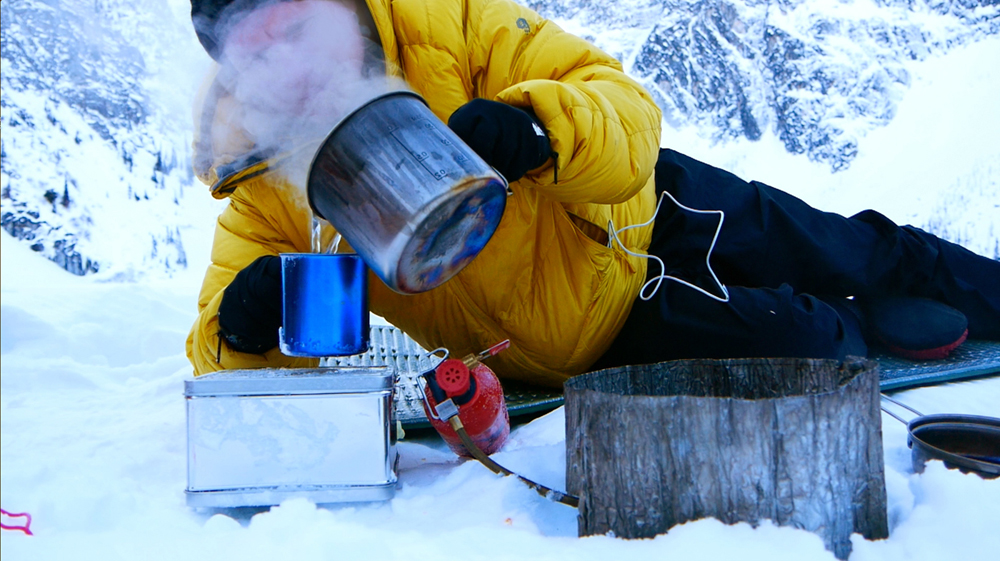
If you want to really enjoy winter backpacking, one of the first skills you need to master is your water management. This is both about staying hydrated and staying warm. It may seem like a minor thing to have your water freeze, especially in a plastic bottle, but if you allow this to happen, it is one of those small things that can spiral into big problems. You don’t want this to happen.
Do not use pack bladders
Perhaps the most important thing to know about winter water management is that you cannot risk letting your gear get wet or letting your water freeze in containers. Pack pladders are dangerous in winter conditions because they can leak on your vital insulated gear and put you at risk of hypothermia. The pack bladder mouth value easily freezes making it impossible to extract water placing you are risk of dehydration. And, if the bladder freezes at night or in your pack, it becomes useless. You simple are carrying heavy useless ice.
If not a pack bladder, what should you use? Let’s start with the basic gear necessary for managing your water.