Categories
Safety Safety Protocol outline

Winter Backpacking Safety Protocols Project

Winter Backpacking Safety Protocols are guidelines and procedures intended to protect individuals from harm in various settings. The development of these protocols is an ongoing project that begins with this centralized outline with links to safety information on this website.

The purpose of the safety outline is to help winter backpackers easily access information that will help them prepare for safer and more enjoyable winter backpacking experiences. This project will include creating new posts to fill in currently missing information on this website. Periodic updates will be added to older posts to highlight safety issues and include new information learned from experience.

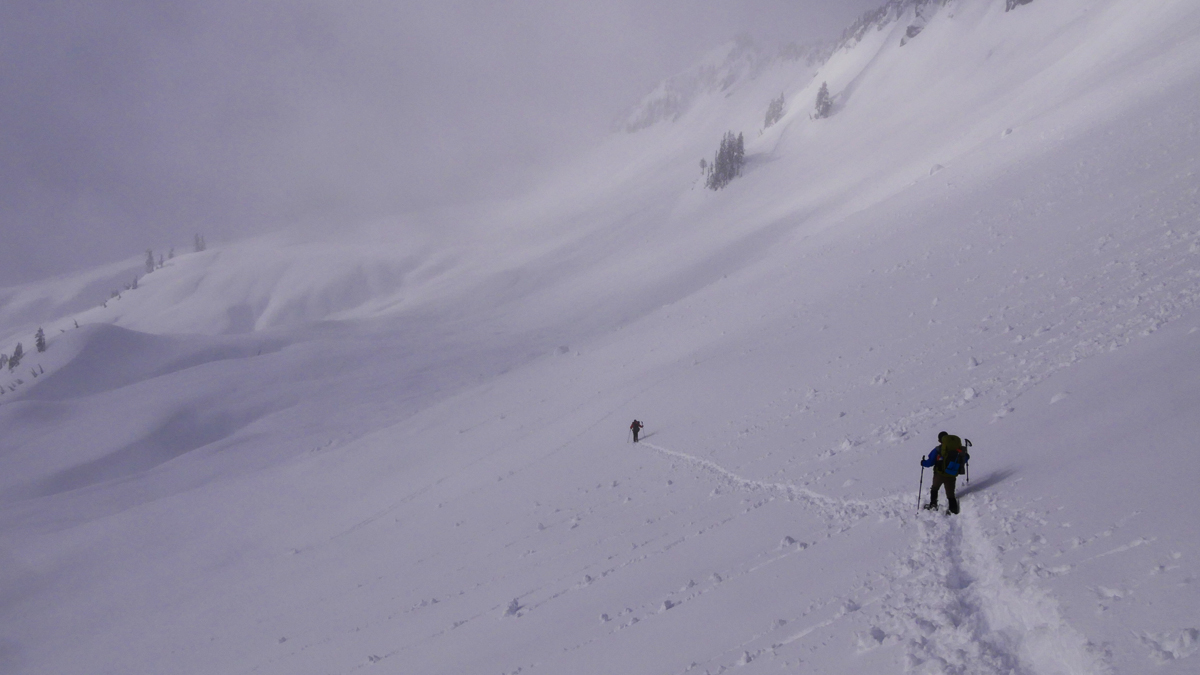
camp evacuation
Sometimes the unexpected happens. An intense lightning storm was spotted approaching our campsite at 2:30 AM. We were on an exposed ridge and had roughly 30 minutes to wake the entire team, pack, and evacuate the ridge.
Categories
Avalanche dangers Avalanche Transceivers Fifteen Essentials for Winter Backpacking Pieps Avalanche Transceiver recall Pieps DSP Sport and Pieps DSP Pro Avalanche Transceivers Safety precautions Safety Tips Winter Backpacking Safety

Product Notice for Pieps DSP Sport and Pieps DSP Pro Avalanche Transceivers

UPDATE: After the initial correspondence and information about possible product defects, Pieps issued a voluntary recall on Apr 12, 2021. The recall email is at the end of this post.

You may have heard some controversy about the switch failing on the Pieps DSP Sport Avalanche Transceivers, especially when used incorrectly. There are now many videos showing the issues, such as this one. Pieps is a company owned by Black Diamond. I received a letter from REI (below) and have decided to post it here for anyone who may find it of interest. It includes an important Instagram safety video link (https://www.instagram.com/p/CGT6EzAlgLn/) from Pieps. If you’re using an older Pieps Transceiver, watch this video because it provides important use and inspection information about the devices that every user needs to know.

Categories
Backpacking Booties Canister and Liquid Fuel Stoves Glacier Glasses Health Hazards Hypothermia prevention Leave No Trace Rain Pants Sleeping bags Sleeping pads Stoves Winter Backpacking Gear Winter Backpacking Safety Winter Planning

Before You Go Winter Backpacking

Even if you are an experienced 3-season backpacker, realize that the winter adds unique risks, and what you know about common gear, such as stoves, hydration systems, sleeping bags, sleeping pads, and tents, will be different from what you need to know for winter conditions.

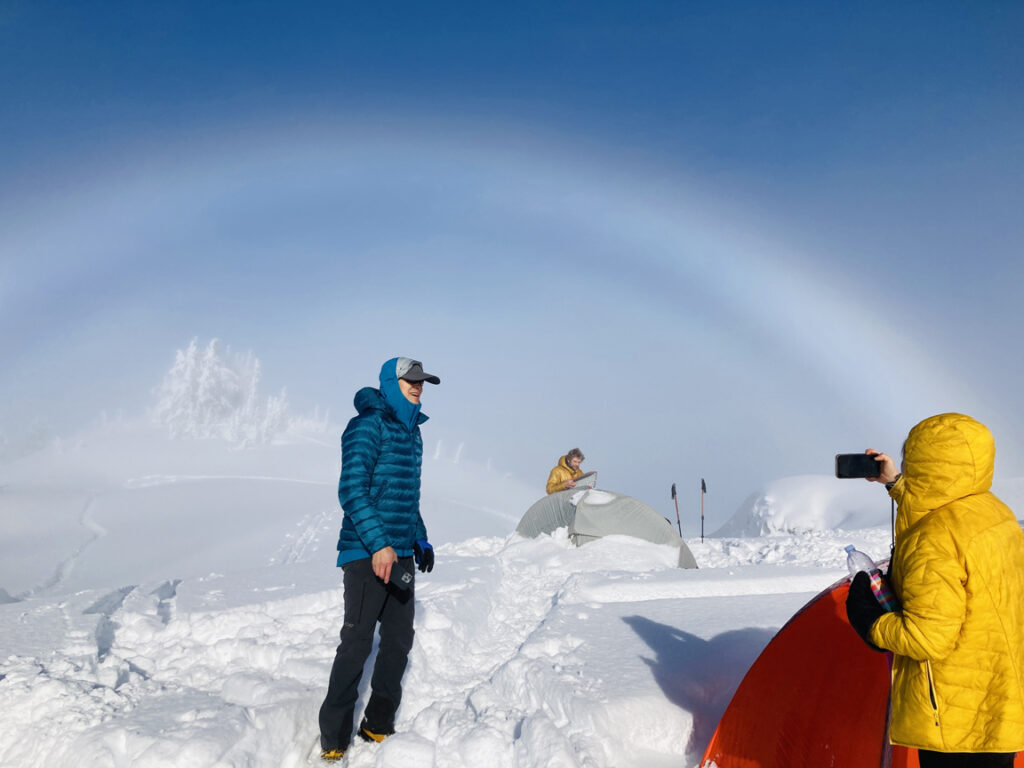
snow rainbow

Know the Risks

Whenever you hike into the backcountry you expose yourself to dangers and risks, such as avalanches caused by snow, mud, or rock slides. There are hunters, falling rocks, falling trees, tree wells, and the risk of slipping off ledges, falling through snow or ice, suffering from hypothermia, snow blindness, frostbite, severe sunburns, stove accidents, etc.

Know the risks when you decide to go winter backpacking. Be prepared and bring what you need. Basic tips for staying warm and knowing what gear to bring are explained below. This is not a comprehensive discussion of winter backpacking or backcountry safety, but it does contain important things that you MUST know before going.